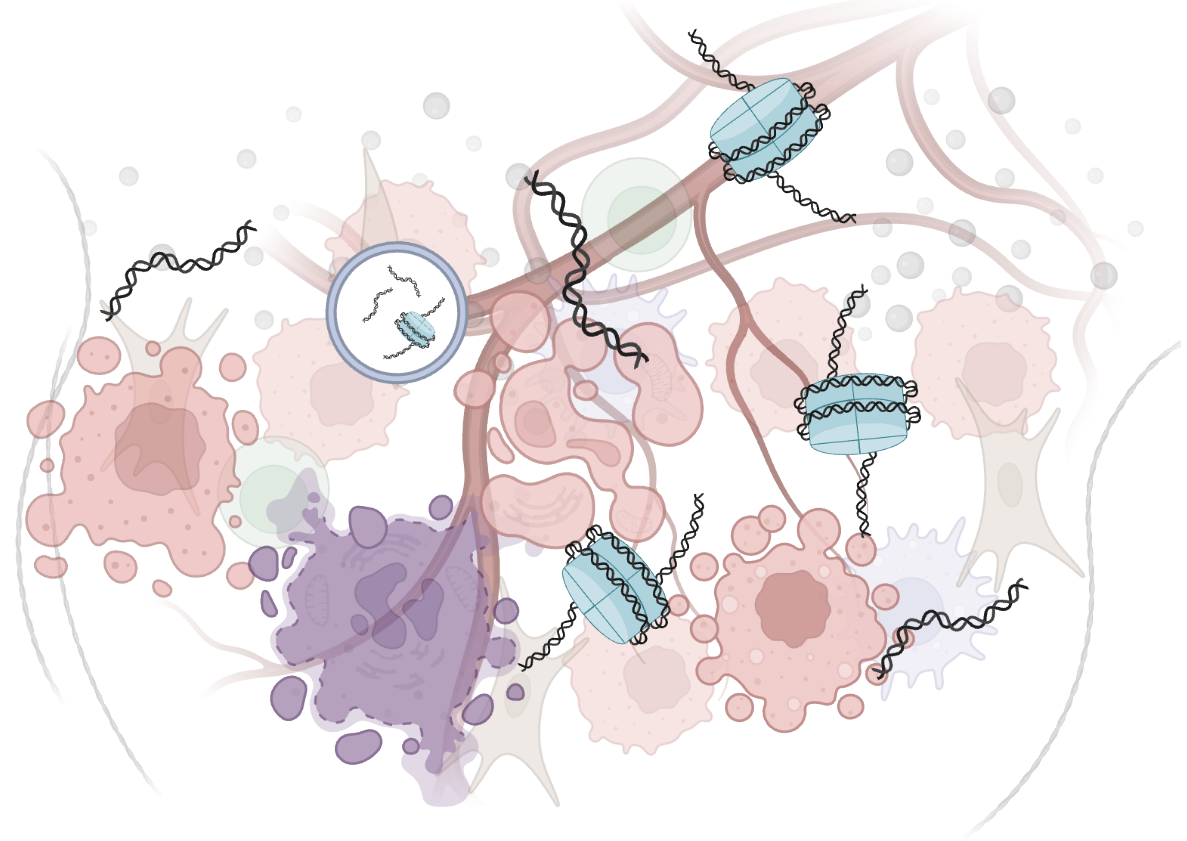
Liquid biopsies for cancer detection
Cancers that are detected at the earliest stages are easier to treat and have better outcomes. Liquid biopsies using cell-free DNA and other circulating analytes could enable routine testing for early-stage cancers. But significant challenges remain in achieving sufficient technical performance and demonstrating clinical benefit to make this idea a reality. We are working to understand current bottlenecks in these technologies and developing new approaches to overcome them.
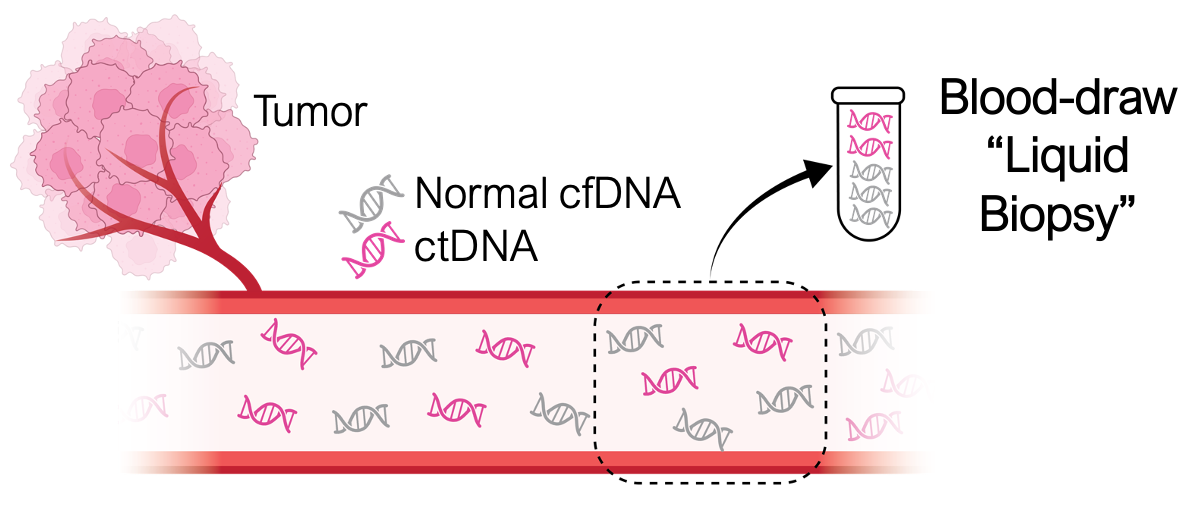
Tracking tumor and normal tissue dynamics during cancer therapy
Cell-free DNA is released from both tumors and healthy tissues. Characterizing this DNA in blood and other body fluids can give us critical information about disease dynamics in the body, including early signals of normal tissue damage in patients receiving cancer therapy. Working with preclinical models and patient samples, we’re evaluating cfDNA as a non-invasive biomarker of tumor and normal tissue response in patients undergoing cancer therapy.
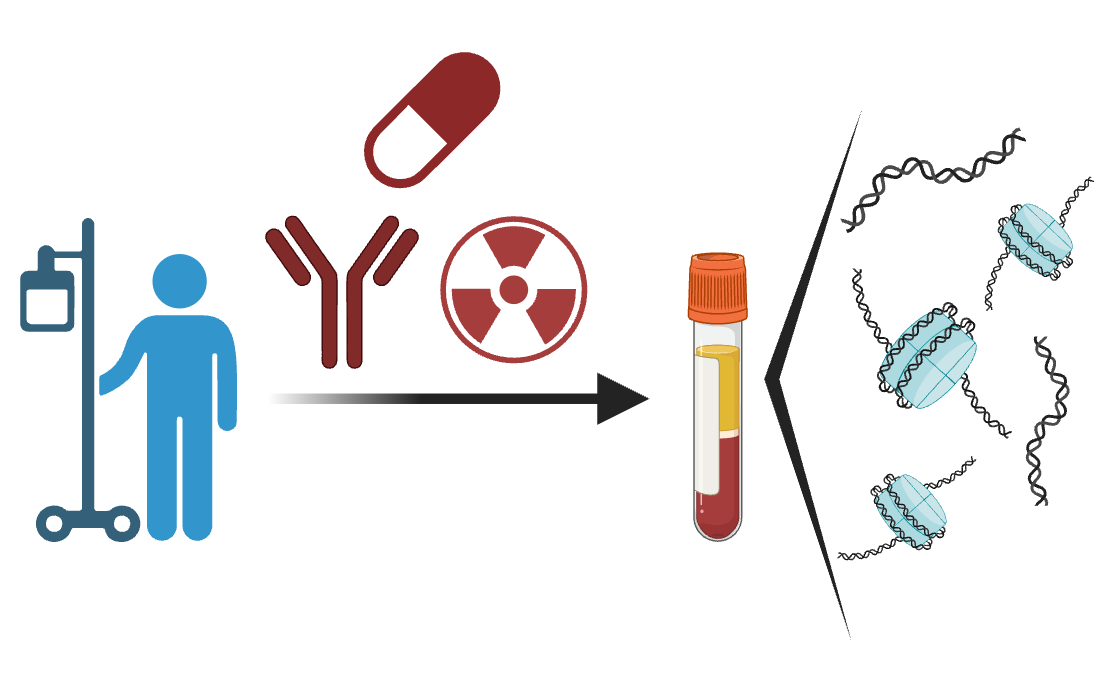
Biology of extracellular DNA
Billions of cells die in our bodies every day, and in the process release DNA and other nucleic acids into the extracellular space. These nucleic acids are a rich source of information about health and disease in the tissues where they originate. But little is known about the biological functions of extracellular DNA and the processes that underlie its biogenesis and clearance. We are working to understand this biology and leverage it for diagnostic and therapeutic applications.